
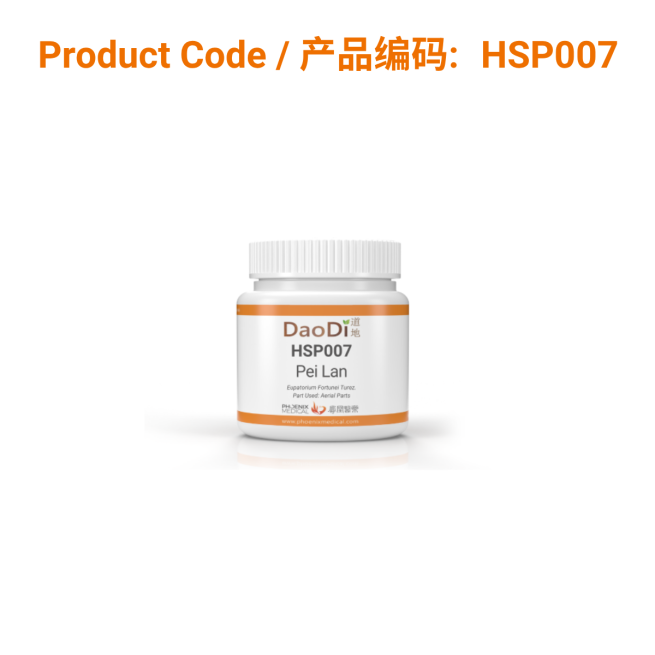
Pei Lan (External) – 佩兰
A concentrated granule preparation of Herba Eupatorii (Pei Lan), derived from the aerial parts of the plant. Prepared for external application use, this herbal granule product is produced in line with DaoDi principles, using authentic cultivation regions and is handled in GMP-certified facilities. It supports professional formulation requirements and meets rigorous purity standards.
Key Features
| Feature | Description |
|---|---|
| Herbal Name | Herba Eupatorii |
| Chinese Name | 佩兰 |
| Part Used | Aerial parts (whole herb) |
| Form | Concentrated granules |
| Quality Standard | Cultivated without synthetic herbicides or pesticides; processed and dried without sulphur; meets EU and UK standards in GMP-certified facilities |
| Affected Meridians | Spleen, Stomach, Lung |
| Storage | Store in a cool, dry place away from direct sunlight |
Batch traceability is maintained for professional assurance. Each pack features secure, sealed packaging suitable for dispensing or practitioner use. Sourced from authentic regions supporting quality consistency
Expiry Date: 30/11/2027
Description
Pei Lan (External) – 佩兰
Latin name: Herba Eupatorii
Common name: Eupatorium Herb
Part used: Aerial parts (whole herb)
Traditional meridian affiliation: Spleen, Stomach, Lung
Pei Lan 佩兰 refers to the use of Pei Lan in an external application form, retaining the same botanical herb but formulated for surface application. In traditional herbal theory it is considered neutral to slightly warm and aromatic, valued for supporting balance in the outer tissues and helping ease tension in surface pathways.
Phoenix Medical’s Pei Lan 佩兰 is cultivated under DaoDi principles from its authentic growing regions. It is produced without synthetic herbicides or pesticides, dried without sulphur, and handled in GMP-certified facilities. Each batch is fully traceable and rigorously tested to comply with EU and UK standards of purity, safety, and consistency.
EXTERNAL USE ONLY
As a result of new analytical techniques we and other members of the British Herbal Medicine Association have recently learnt that this plant is likely to deliver toxic pyrrolizidine alkaloids (PAs) at levels far higher than the maximum recommended by health regulators. PAs have short term toxic effects in very high doses, but our main concern is the risk many years later of damage to the liver and other organs, and so we have taken the responsible decision in the interests of public safety to not supply this plant for internal use.
Additional information
| Weight | 0.15 kg |
|---|